Heat Exchanger Production Line Selection
Steve
2026-09-16
New Heat Exchanger Factory: Machines or a Complete Line?
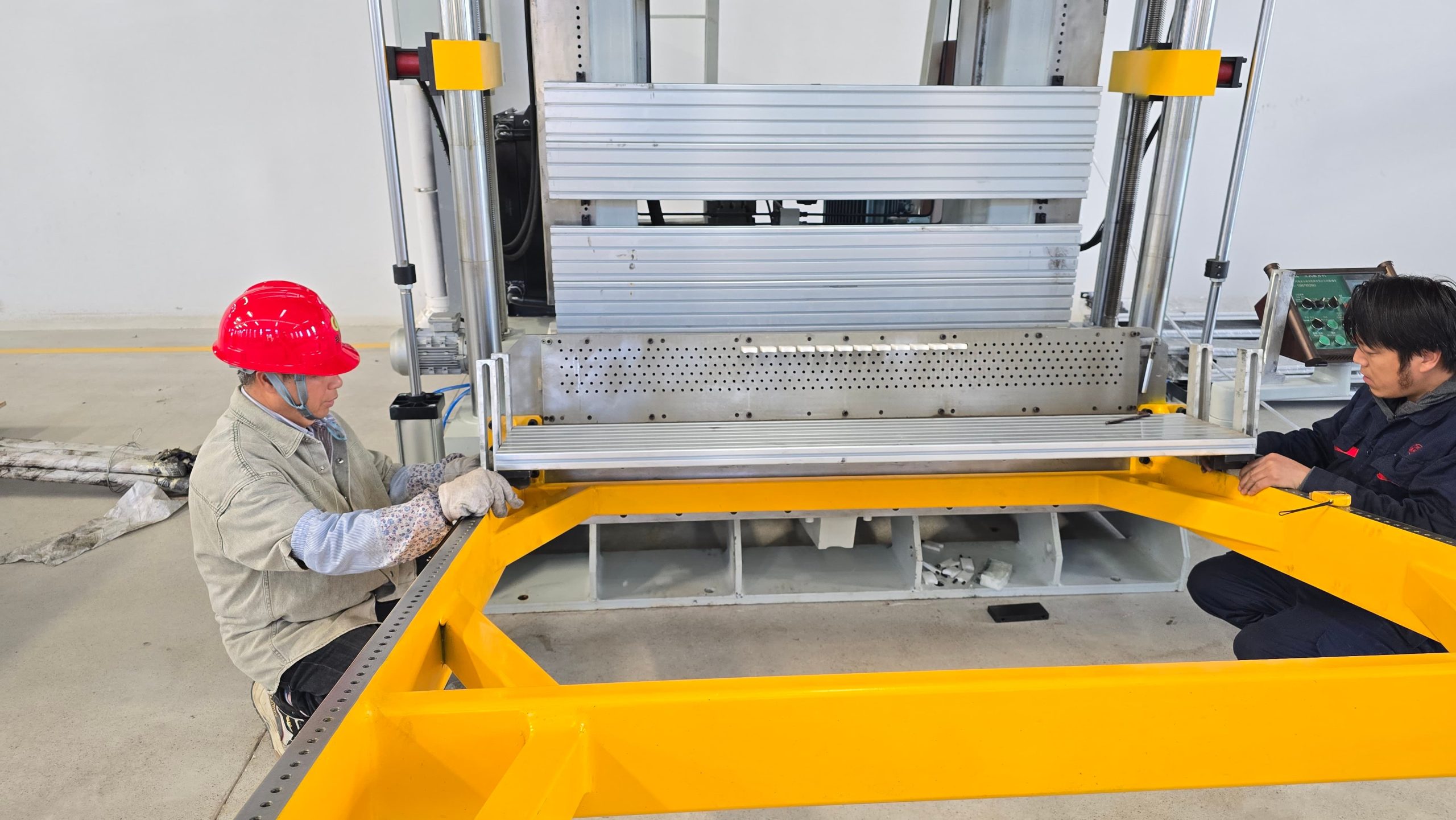
Heat exchanger production line selection should begin with product families, process routes, realistic takt, and the expansion plan, not simply with the number of machines to buy. For a fin-and-tube heat exchanger factory, standalone machines, semi-automatic cells, and a linked line can all be valid. The right choice is the configuration that repeatedly delivers conforming products under the actual product mix.
Teams mapping equipment and material flow can consult NIST MEP guidance on lean and process improvement. It offers a useful framework for identifying flow waste and bottlenecks, while machine quantities must still be validated with plant-specific product data, changeover time, and operating constraints.
A reliable proposal converts finished-product demand into fin strokes, hairpin quantities, expanded tube holes, brazed joints, and test minutes. Comparing these workloads by process prevents a common mistake: excess capacity at one station while a manual assembly or test operation limits shipments.
Three heat exchanger production line strategies
|
Strategy |
Typical configuration |
Best-fit conditions |
Trade-off |
|
Standalone machines |
Fin press line, hairpin bender, tube expander, brazing, and test stations operate independently |
High mix, volatile orders, flexible scheduling, and controlled manual material supply |
More inter-process handling, temporary storage, and production tracking |
|
Semi-automatic cells |
Several consecutive actions are integrated while operators load, unload, or confirm |
Stable product families and a need to reduce repeated positioning without losing changeover flexibility |
Upstream and downstream balance still depends on operators and abnormal recovery |
|
Linked production line |
Automatic transfer, identification, data exchange, and in-line inspection connect multiple processes |
Stable volume, standardized interfaces, and mature engineering and maintenance capability |
Higher investment and system dependence; one fault may stop several processes |
These options are not a simple progression from basic to advanced. A high-mix factory may gain more control from independently operable machines because it can schedule trials, changeovers, and maintenance locally. A highly standardized factory may benefit from linked transfer when handling and waiting are proven constraints.

Convert finished-product demand into process workload
Five hundred heat exchangers do not represent one fixed workload. Two models may require very different numbers of fins, hairpins, return bends, brazed joints, and test minutes. Equipment planning therefore needs a product-family workload sheet rather than a single finished-unit target.
|
Процесс |
Recommended workload unit |
Parameters that drive equipment capacity |
|
Fin stamping |
Press strokes, fins, or strip length |
Rows, fin pitch, output per stroke, stock width, material window, and die-change frequency |
|
Copper tube processing |
Straight tubes or conforming hairpins |
Diameter, wall thickness, length range, bend radius, tubes per cycle, and loading time |
|
Lacing and assembly |
Cores or tubes inserted |
Core size, row count, hole count, fin-hole consistency, operator count, and fixture quantity |
|
Tube expansion |
Cores, batches, or expanded holes |
Core height, tube-sheet design, hole count, loading, rod change, and recipe selection |
|
Brazing and test |
Joints and test minutes |
Circuit count, joint access, internal volume, filling, stabilization, retest, and rework |
Available capacity must deduct breaks, material changes, die or fixture changes, first-piece approval, cleaning, and planned maintenance. A short maximum-speed run is an input for planning, not the same as sustainable conforming output.
Balance the line instead of buying the fastest machine
The process that limits shipments under the current product mix is the true constraint. If fin stamping already has reserve capacity while lacing, expansion, or leak testing limits delivery, a faster press will mainly create more work in process.
- Multiply process time by demand for each product family instead of relying on shift averages.
- Include loading, unloading, inspection, queues, and material handling in the complete cycle.
- Improve bottleneck changeover, minor stops, and first-pass yield before adding another machine.
- Use controlled buffers for short disturbances, with minimum and maximum limits that prevent permanent overproduction.
When a complete heat exchanger production line makes sense
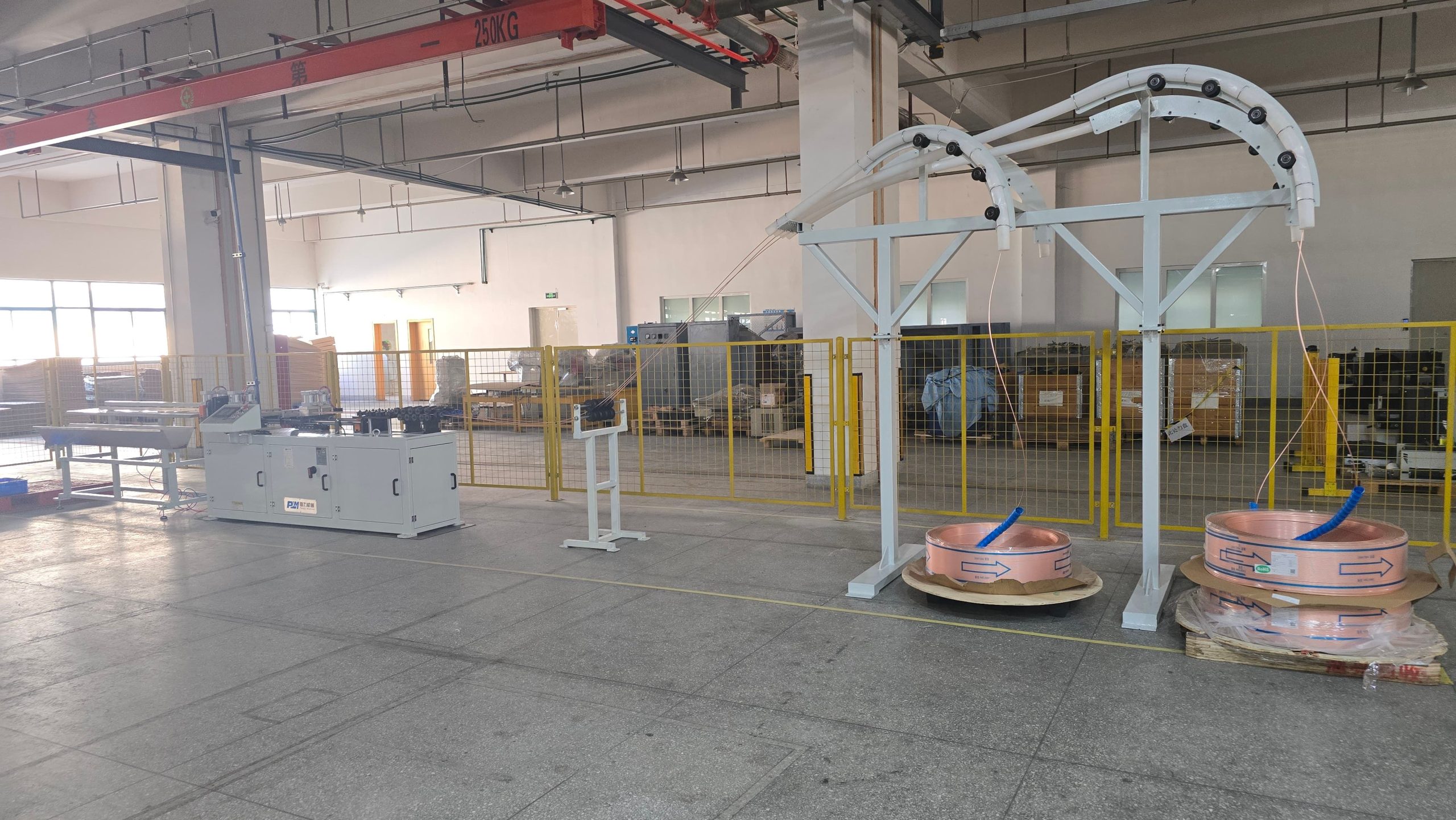
A linked line becomes attractive when inter-process handling clearly limits output and when products, tooling, and data interfaces are already stable. The following conditions should be demonstrated rather than assumed.
- The main product families have a defined tube diameter, row range, core-size range, and long-term process route.
- Manual transfer causes measurable fin damage, tube scratches, orientation errors, batch mixing, or excessive labor time.
- Every critical process has a qualified parameter window and a defined abnormal-recovery method.
- The plant has adequate electrical, pneumatic, network, safety, maintenance, and engineering capability.
- The return includes conforming output, handling, rework, traceability, and delivery performance, not only assumed headcount reduction.
When phased equipment investment is the better route
A phased plan is usually more resilient when demand is uncertain, products are still changing, or a new plant must establish production with limited initial capital. The plant can still use a complete-line design philosophy while purchasing equipment in stages. Material direction, operating height, utilities, data names, and future interfaces should be defined from the start.
- Establish the core process: install equipment that defines product range and quality for fins, copper tubes, expansion, and testing.
- Remove a verified bottleneck: use actual cycle, downtime, handling, and quality data to select the first automated cell.
- Standardize material and data flow: align batch IDs, recipe naming, machine states, and conforming-result records.
- Connect the line last: add automatic transfer only after adjacent processes are stable and buffers, bypasses, and recovery modes are calculated.

Equipment interfaces matter as much as machine speed
A production line is a combination of process, handling, data, safety, and maintenance boundaries. If the handoff between machines is undefined, operators may still need frequent repositioning even when every machine meets its individual speed specification.
|
Interface |
Confirm before purchase |
Typical consequence if missed |
|
Product and tooling |
Minimum and maximum size, support points, datum, orientation, weight, and damage-sensitive zones |
Secondary turning, unsupported transfer, crushed fins, or accumulated positioning error |
|
Takt and buffer |
Adjacent cycles, changeover batch, recovery time, carrier capacity, and WIP limits |
Frequent upstream blocking, downstream starvation, or uncontrolled inventory |
|
Electrical and data |
Machine states, alarms, recipes, product ID, safety handshake, data ownership, and cybersecurity |
Inconsistent recipes, incomplete traceability, or unsafe stop and restart behavior |
|
Safety and maintenance |
Guarding zones, personnel entry, isolation, manual mode, bypass, service removal, and responsibility boundary |
A local failure becomes a long line stop and transfer equipment blocks maintenance access |
Common quality problems caused by a poor line decision
|
Problem |
Likely cause |
Adjustment and optimization |
|
Fin-hole deformation, burrs, or unstable stacking |
Press selected by peak speed only; material window, lubrication, die care, and collection capacity are not synchronized |
Validate sustained conforming speed with representative material and pitch; time coil change, cleaning, lubrication, and collection separately |
|
Hairpin length drift, ovality, or scratches |
Loading, unloading, and longest-workpiece support are omitted from the cycle; one machine covers an excessively wide product range |
Test boundary products through feeding, straightening, bending, and unloading; group products by diameter and length |
|
Under-expansion, over-expansion, or core distortion |
Expander stroke, force, clamping, and loading do not match the core range; hold time is shortened to chase takt |
Create qualified recipes by tube sheet, core stiffness, and tube size; plan with the complete conforming cycle |
|
Core damage or tube-end misalignment after transfer |
Machines were purchased before carriers, orientation, buffer areas, and support points were standardized |
Define load zones, dedicated carriers, stacking limits, and one-way routes before evaluating automatic transfer |
|
Frequent alarms and complete-line stops |
Buffers, manual mode, bypass, and recovery authority are undefined; adjacent parameter windows do not agree |
Stabilize each machine first, commission the line in sections, and size buffers from real recovery time |
Repeated quality loss should not automatically be blamed on insufficient automation. If material, tooling, datum, clamping, parameter windows, and inspection methods are unstable, tighter line integration usually produces defects faster and makes root causes harder to isolate.
Review standalone and complete-line options with SINOAK
SINOAK can evaluate fin press lines, straightening and cutting machines, hairpin benders, tube expanders, and supporting stations from fin, tube, core, and workload data. For smaller factories or rapidly changing product ranges, the proposal can retain independent operation, manual changeover, and future interfaces instead of forcing premature full-line integration.
For an initial production concept, submit drawings, monthly demand, shifts, product mix, changeover frequency, and available floor conditions through SINOAK heat exchanger production equipment and technical support. The objective is to identify the real constraint and necessary interfaces before comparing machine quantities and automation levels.
Information to prepare before requesting a proposal
- Monthly, shift, and peak-season demand for every product family, including growth assumptions.
- Fin drawings, material, thickness, row pattern, pitch, columns, die configuration, and changeover requirements.
- Tube diameter, wall thickness, incoming form, developed length, bend radius, hairpin count, and surface limits.
- Minimum and maximum core dimensions, weight, tube-hole count, tube-sheet design, expansion, and circuit requirements.
- Current cycle, changeover, downtime, first-pass yield, rework, and operator count by process.
- Building layout, clear height, floor loading, entry route, material direction, lifting, power, compressed air, and exhaust.
- Actions that must be automated, manual steps to retain, traceability fields, acceptance product mix, and continuous-run target.
FAQ
Should a new factory purchase a complete line at once?
How should the number of machines be calculated?
Will a faster fin press always increase finished output?
Can a high-mix, low-volume factory use automation?
Conclusion
The choice between standalone machines and a complete heat exchanger line cannot be made from budget or nameplate speed alone. Convert demand into process workload, then assess product stability, changeover, material flow, qualified process windows, and maintenance capability. When the data is incomplete, a phased system with independent operation and planned interfaces often controls risk better than early full-line integration.
Последние новости