Automatic Hairpin Bender Selection Guide for HVAC Coil Manufacturers
Automatic Hairpin Bender Selection Guide for HVAC Coil Manufacturers
Steve
2026-10-10
Automatic Hairpin Bender Selection Guide for HVAC Coil Manufacturers
In heat exchanger manufacturing, the preparation of U-bent tubes—commonly known as hairpin tubes—is the foundational step for constructing finned tube coils. Whether producing residential evaporator coils, commercial air-cooled condensers, or industrial refrigeration units, the quality, length consistency, and bend radius precision of your hairpin tubes directly dictate down-stream assembly speed and coil quality.
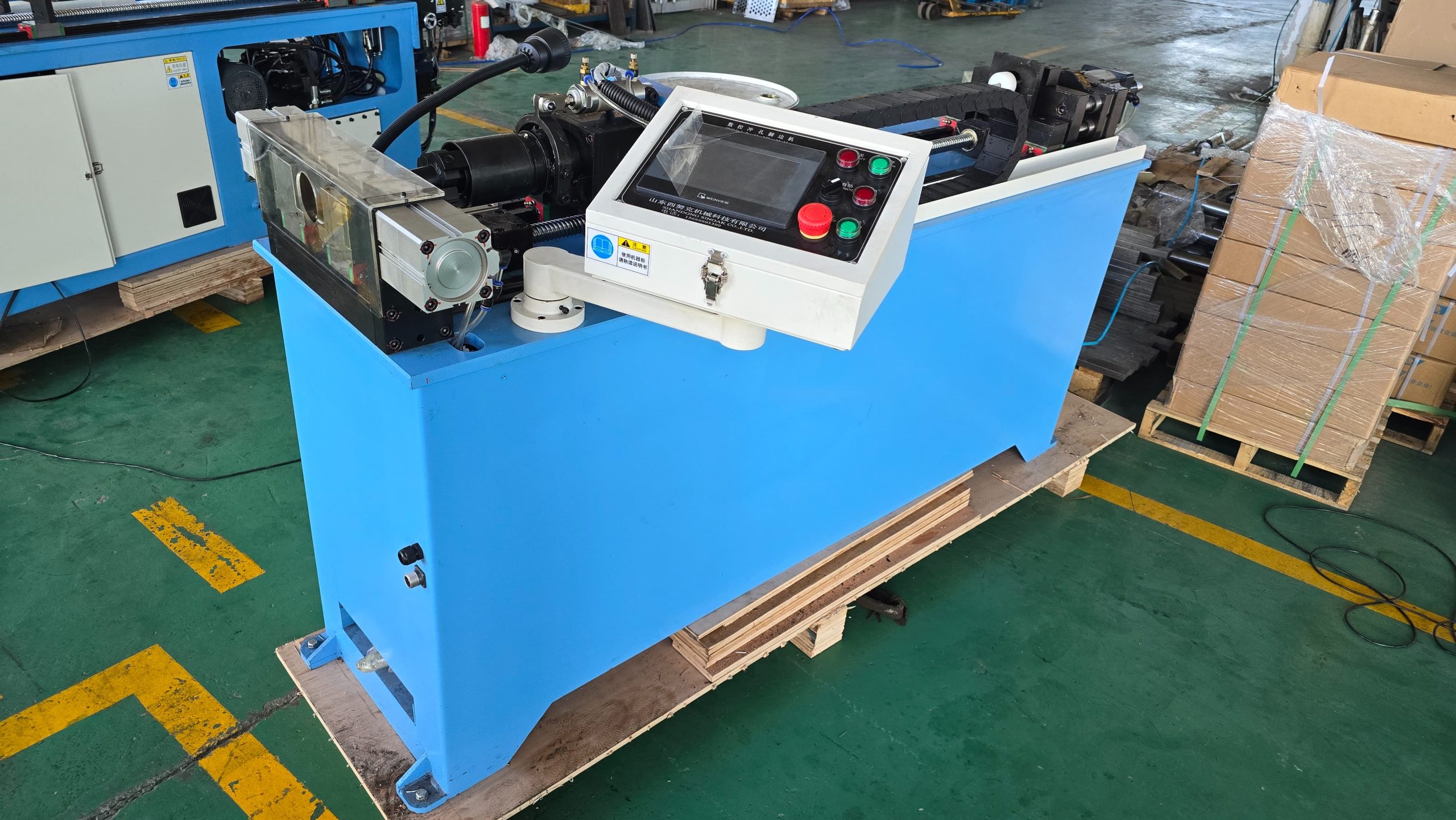
An automatic hairpin bender machine automates the uncoiling, straightening, volumetric feeding, clamping, rotary draw bending, and end-sizing of copper or aluminum tubing. Investing in the right bending platform ensures high throughput while eliminating material waste and wall thinning.
This comprehensive guide covers the operational physics, mechanical vs. CNC servo architectures, tooling selection criteria, and technical data needed when specifying an automatic hairpin bender for your production line.
1. Understanding the Automatic Hairpin Bending Process
Unlike conventional mandrel tube benders that process one straight tube length at a time, an industrial hairpin bender processes multiple level-wound coils (LWC) of tubing simultaneously (typically 2 to 6 lines in parallel).
The process moves sequentially through key automated steps:
Decoiling and Tensioning: Coils of tubing are continuously unreeled from pay-off stands equipped with pneumatic tension brakes to prevent sag or mechanical stress.
Multi-Plane Straightening: Tube lines pass through orthogonal roller banks (vertical and horizontal orientation) to remove residual coil set and ovality.
Precision Feeding: Servo-driven feed belts or grippers advance the tubes simultaneously to the exact programmed length.
Rotary Draw Bending: Bending dies swing around the internal mandrel pins to form the 180-degree U-bend without flattening or buckling the tube wall.
Chipping / Orbital Cut-off & End Sizing: Tubes are severed via chip-free rotary cutters or pull-apart blades, followed by mechanical sizing dies that expand or flare the tube ends for subsequent expansion.
2. Mechanical/Hydraulic vs. Full CNC Servo Hairpin Benders
When evaluating hairpin bending equipment, machine drive architecture determines flexibility, cycle time, and line changeover speed.
Flexible, high-mix/low-volume multi-spec production
3. Critical Engineering Selection Factors
To choose the correct machine configuration for your factory floor, systematically evaluate these key parameters:
(1) Tube Outer Diameter (OD) and Wall Thickness
Hairpin benders are categorized by their tube-diameter capacity ranges:
Small Diameters (5mm, 7mm, 7.94mm / 5/16″): Require delicate tension control and high-rpm rotary cutters to prevent crushing thin copper walls (e.g., 0.25 mm to 0.35 mm inner-grooved tubes).
Medium Diameters (9.52mm / 3/8″, 12.7mm / 12.88mm): The industry standard for air conditioning and commercial refrigeration evaporators.
Large Diameters (15.88mm / 5/8″ and above): Used in heavy industrial refrigeration and process coolers. These demand high-torque bending heads and heavy-duty frame structures to withstand high bending forces.
(2) Number of Simultaneous Lines (Throughput Capacity)
Hairpin benders are built in multi-tube configurations (e.g., 2-line, 4-line, or 6-line machines).
A 4-line machine running at 10 cycles per minute produces 2,400 hairpins per hour, making it ideal for standard mass-production evaporator lines.
Dual-tube (2-line) benders provide faster setup adjustments and are preferred for extra-long industrial hairpins (up to 6.0 meters in length).
Modern HVAC coils overwhelmingly utilize internally micro-grooved copper tubing to maximize heat transfer surface area. Improper mandrel selection during 180-degree bending can flatten internal spiral teeth.
Ensure the machine is equipped with programmable mandrel retraction timing and polished ball mandrels that retract just before the final bending angle is achieved.
4. Key Accessories and Downstream Integration
To maximize line efficiency, automated hairpin benders should be integrated with auxiliary equipment:
Automatic Pay-off Stands: Servo-assisted motorized decoilers with loop-control sensors prevent sudden tension spikes on thin-wall tubes.
Hairpin Collector and Inclinator: Automated drop tables that stack finished hairpins neatly into transport carts without bending long tube legs.
Return Bend Machines: Dedicated small-radius 180-degree elbow benders that process short crossover tube joints to complement hairpin production.
Specifying the correct automatic hairpin bender requires providing your machinery vendor with complete material and geometric parameters.
To help our technical team evaluate your production needs and prepare a customized equipment quote and plant layout, please include the following parameters in your inquiry:
RFQ Technical Information Checklist:
Tubing Material & Specifications:
Material type (Copper / Aluminum / CuNi / Stainless Steel)
Tube Wall Thickness range & internal geometry (Smooth bore vs. Micro-grooved)
Tube supply packaging (Level-Wound Coil spool dimensions & max weight)
Hairpin Geometric Dimensions:
Center-to-Center (C-to-C) bend distance / Pitch requirements
Minimum and Maximum Hairpin Leg Length (L) (e.g., 300 mm to 3,500 mm)
End sizing preferences (Bell expansion, flaring, or straight cut)
Capacity & Line Automation:
Required output per shift (e.g., number of hairpins per 8 hours)
Number of simultaneous lines preferred (2-line, 4-line, or 6-line setup)
Machine control architecture preference (Full Servo CNC vs. Semi-Hydraulic)
Plant Facilities & Utilities:
Available floor space
Factory power specifications
Compressed air availability and pressure rating
As a leading manufacturer of complete heat exchanger equipment solutions—from automatic hairpin benders and fin press lines to vertical and horizontal tube expanders—we deliver machinery tailored to your exact production specs.
Contact our engineering support team today with your hairpin drawings to receive a free equipment consultation, floor layout drawing, and competitive proposal!