How to Choose a C Frame or H Frame Fin Press
Steve
2026-09-17
How to Choose a C Frame or H Frame Fin Press
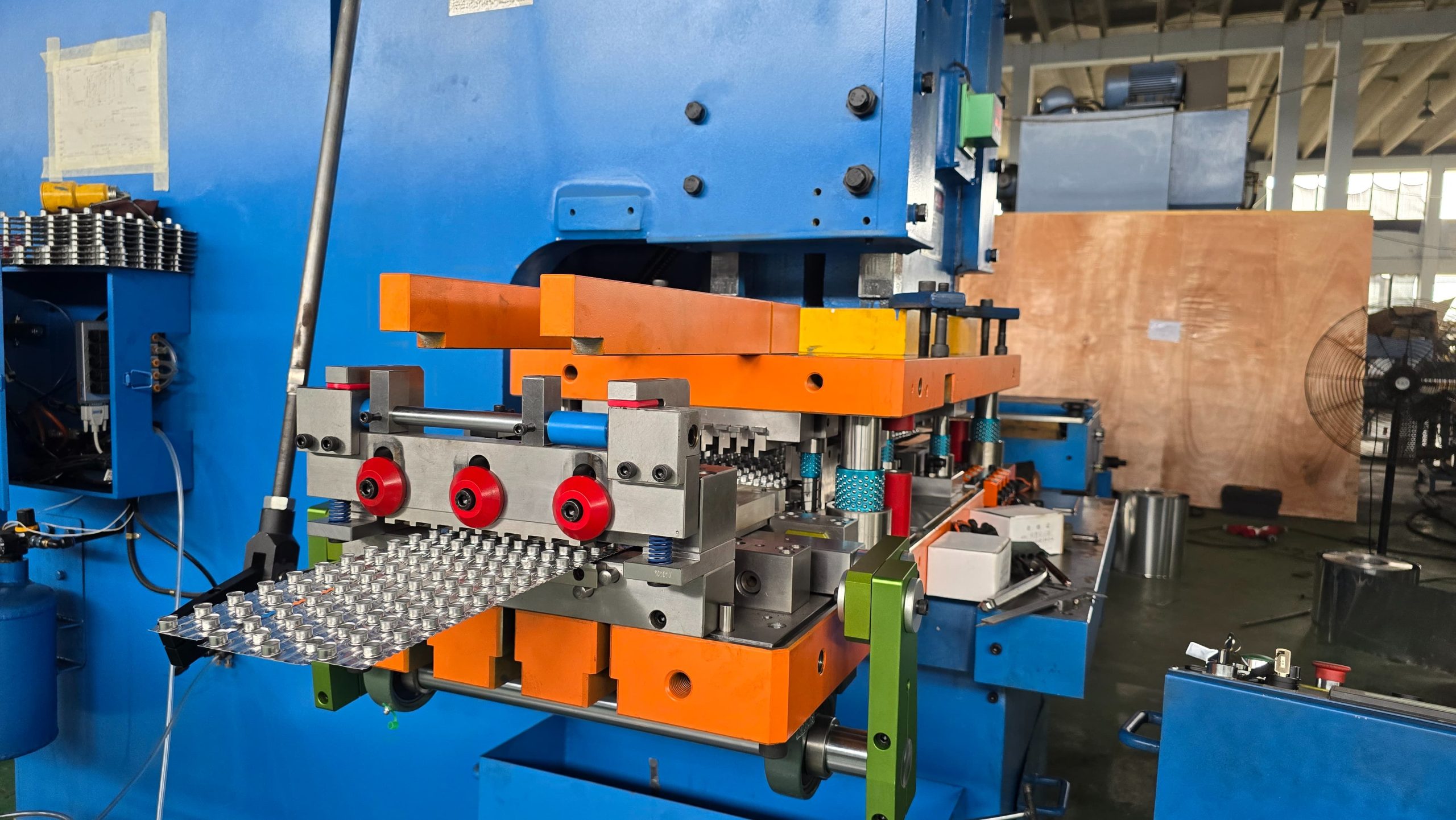
fin press selection begins with the fin die, coil material and required output rather than the press frame alone. A C-frame and an H-frame fin press can both make heat exchanger fins, but the right choice depends on die size, tonnage, stroke, rigidity, changeover frequency, feeder layout and the stability required at the finished-fin stage.
Machine guarding, coil handling and access for die maintenance should be defined before a press is installed. The OSHA machine guarding guidance is a useful reference when the production team is mapping safeguarding responsibilities around presses, feeders and material handling.
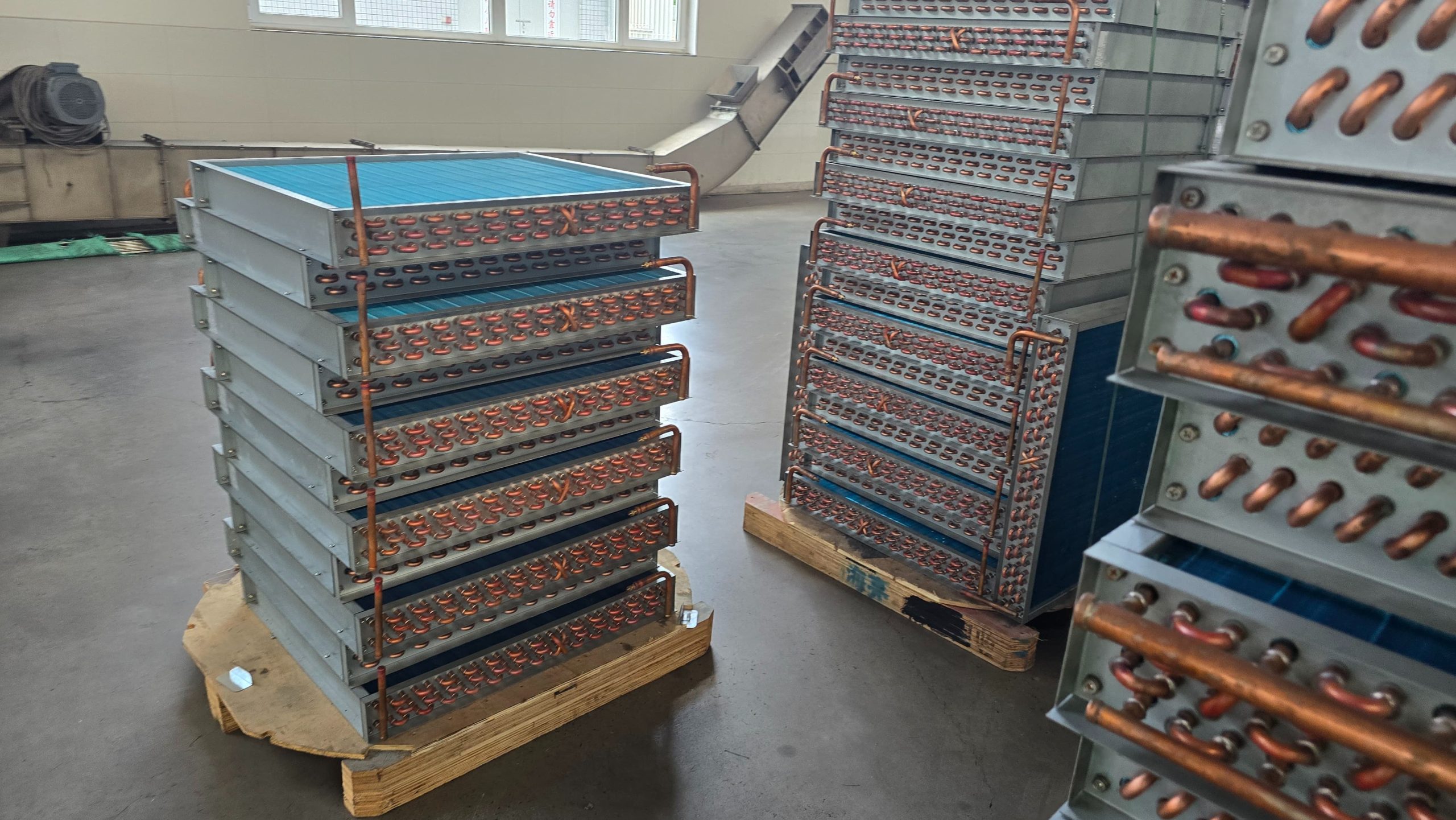
For heat exchanger manufacturers, a press is not evaluated only by the number of strokes per minute. Fin pitch consistency, collar formation, burr condition, material flow, die wear and stacking quality affect downstream tube insertion, expansion and coil assembly. The press frame must support a repeatable process window for the actual product family.
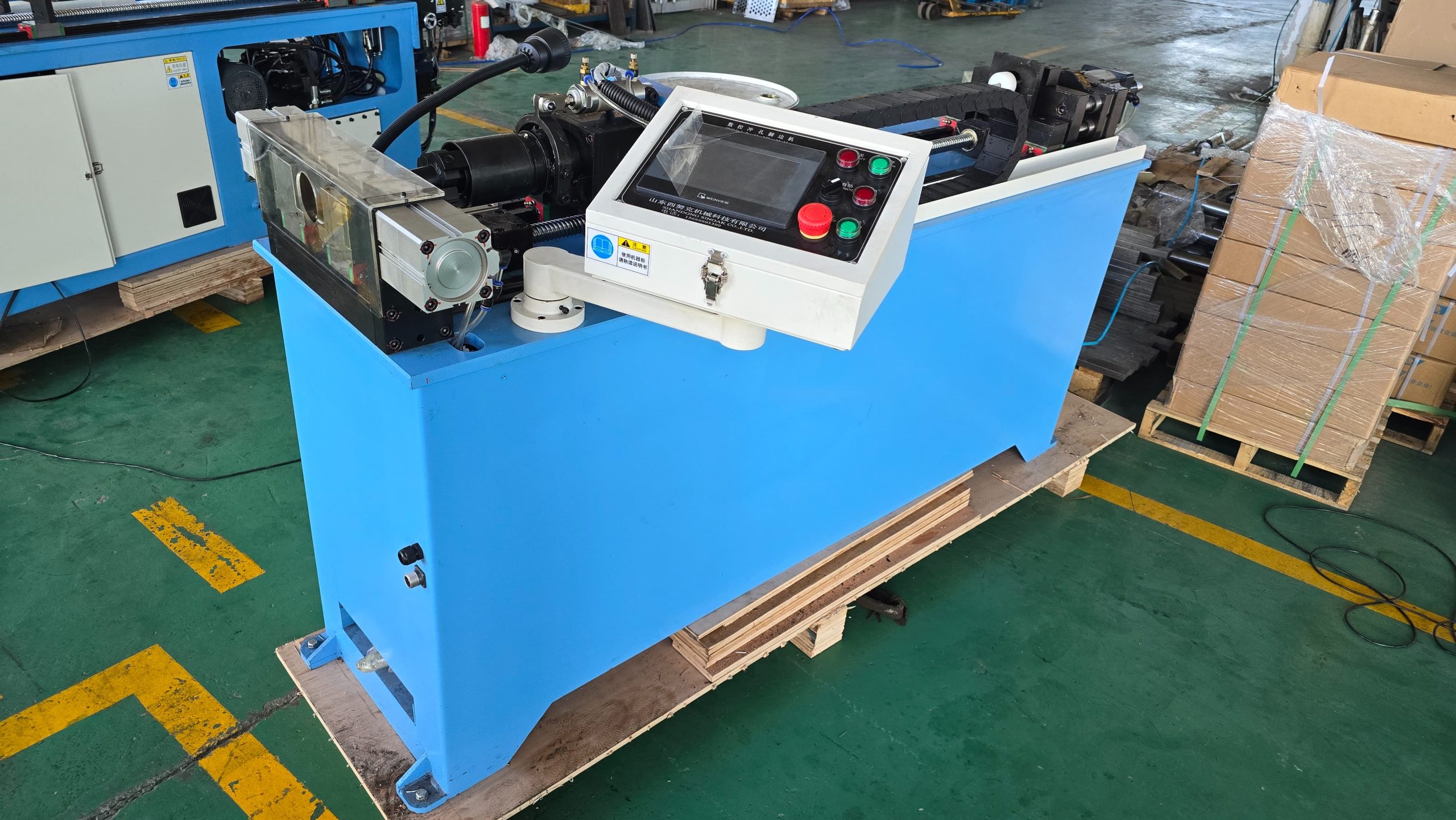
Fin Press C Frame and H Frame Basics
Selection factor | C-frame fin press | H-frame fin press | What the factory should verify |
Frame access | Open front and side access can simplify die changes, setup observation and maintenance in compact layouts. | A symmetrical frame generally places more structure around the die area and needs a planned access route. | Confirm die loading direction, maintenance clearance, coil path and operator access with the actual layout. |
Rigidity and load path | Can be suitable for the defined die, material and output range when the frame and tooling are correctly matched. | The twin-side frame commonly provides a more balanced load path for larger or more demanding dies. | Do not assume a frame type alone guarantees accuracy; check rated tonnage, bed area and operating conditions. |
Product flexibility | Often attractive when a factory values access, shorter production runs and frequent product adjustment. | Often considered for stable high-output work where die size and process conditions are well established. | List the current and expected fin sizes, material grades, coil widths and changeover frequency. |
Line integration | May be easier to position in constrained spaces, but feeder and scrap paths must still be kept stable. | Needs adequate room for press, die handling and service, while supporting a robust continuous arrangement. | Plan the decoiler, feeder, lubrication, scrap, fin collection and safe recovery path as one system. |
Investment decision | A compact solution can be sensible when the product mix and production plan support it. | A larger structure may be justified when long-term output and die stability need a broader process window. | Compare qualified output, changeover and maintenance demand, not only the purchase price or nominal speed. |
The practical decision is not that one frame is always better. A well-matched C-frame press can be the right production tool for a flexible product mix. An H-frame press can be the stronger fit when the die, material and output plan require additional rigidity and a stable continuous duty cycle.
Start With the Fin Die and Process Window
A fin press should be selected from the die outward. The factory first needs to define the fin profile, material thickness and temper, strip width, die dimensions, required stroke range, press tonnage, lubrication method, scrap route and finished-fin collection. These inputs establish the operating window before a C-frame or H-frame preference is made.
Process input | Why it matters for the press | Questions for the equipment review |
Fin die size and mass | They affect bed requirements, die change method, access and the force distribution seen during production. | What are the die footprint, height, weight, guide arrangement and lifting method? |
Fin material | Aluminium grade, thickness, coating and coil condition influence forming force, lubrication and burr control. | Which coil tolerances, surface conditions and material batches must run without repeated adjustment? |
Fin geometry | Collar depth, louver pattern, pitch and slit features determine sensitivity to die condition and press repeatability. | Which dimensions are critical for tube insertion and which defects stop downstream assembly? |
Output and changeover | A higher nominal speed is not useful if die setting, coil changes or fin collection interrupt qualified output. | How many product families run each month, and how much time is available for a verified changeover? |
When a C Frame Fin Press Is a Strong Fit
A C-frame fin press is often considered when a manufacturer needs straightforward die access, compact floor use and practical flexibility across established product families. It is especially useful when the process team values quick observation during setup and when planned products remain within the verified die and load range.
- Frequent product or fin-die changes where access and setup visibility help the team work efficiently.
- Moderate, clearly defined material and die requirements that fit the press bed, slide and rated tonnage.
- A factory layout where material feed, scrap removal and finished-fin discharge can be kept clear without compromising safe access.
- Projects that need a staged production plan, with room to add or refine peripheral equipment after the core process is proven.
The limitation is not simply capacity. If a new die, a wider strip, a different coil condition or a higher duty cycle pushes the machine outside its proven window, the factory may see unstable collar formation, tooling wear, pitch variation or more frequent adjustment. A C-frame should be accepted against representative production conditions, not an ideal sample only.
What an H Frame Fin Press Requires
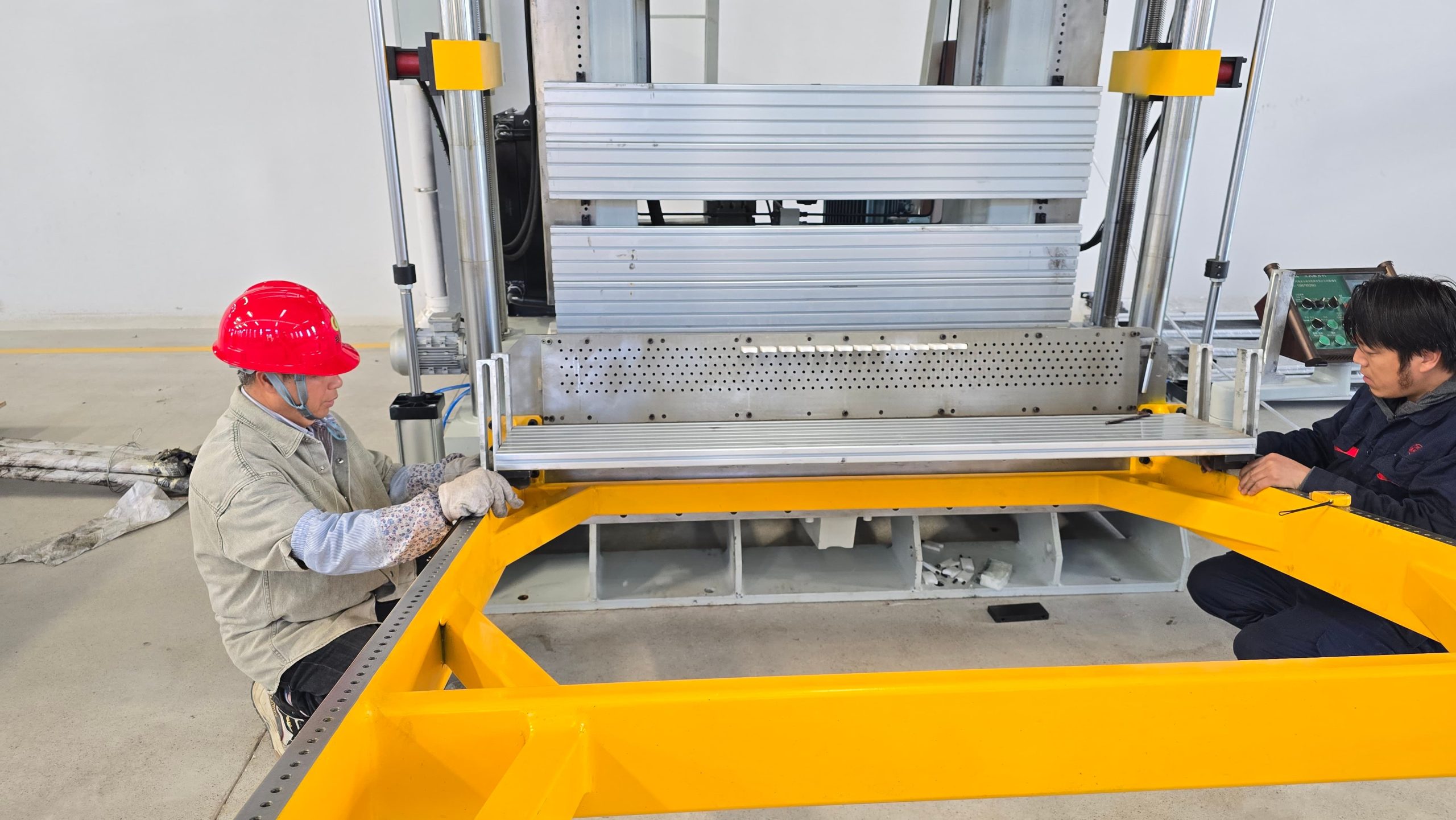
An H-frame fin press is normally evaluated where a more balanced structural load path, larger tooling requirements or stable high-duty production justify the additional frame and integration planning. It can support a robust process, but it still needs the correct die, feeder, lubrication and material control to deliver repeatable fins.
Area to confirm | Why it is important | Acceptance evidence |
Die and bed compatibility | The press must accommodate the die footprint, shut height, guide system and change method without creating unsafe or slow maintenance work. | Documented dimensions, die loading procedure and a trial with representative tooling. |
Material feed | A rigid press cannot compensate for coil wandering, poor straightness, incorrect feed timing or uncontrolled lubrication. | Coil specification, feeder setup, strip tracking checks and samples taken at normal operating speed. |
Fin discharge | Fins need to leave the die area without distortion, mixing or blockage before they reach stacking or tube insertion. | Defined collection direction, buffer capacity, part separation and response plan for a discharge stoppage. |
Maintenance plan | Long-term stability depends on access for inspection, lubrication, guide adjustment, tooling service and spare parts. | Clear maintenance access, responsibility list and planned checks for the press, feeder and die. |
A Fin Press Line Is More Than the Press
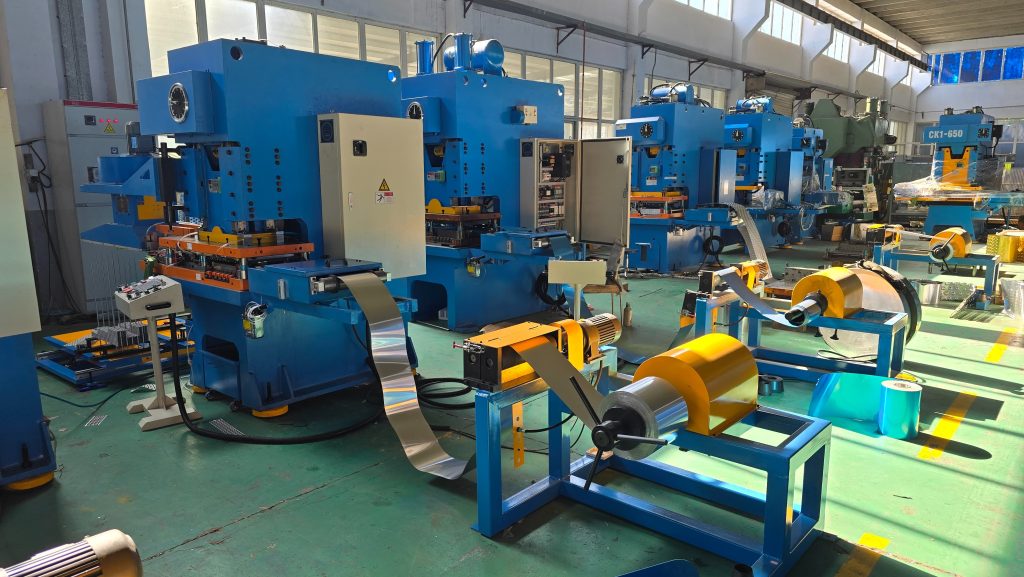
A fin press line is a production system, not a standalone press. The decoiler, coil guide, feeder, lubricator, fin die, scrap handling, fin collection and safety system must run at a compatible rhythm. Weak control at any one point can turn a high-speed press into a source of mixed fins, die damage or repeated stops.
- Define where each coil is identified, loaded and tracked before it reaches the feeder.
- Keep the material path stable through guiding, lubrication and feed timing rather than correcting drift after defects appear.
- Design the finished-fin discharge so fins are supported, separated by product or batch and available to the next process without manual sorting.
- Include safe access and a recovery method for coil depletion, strip breakage, fin jams and die maintenance.

Common Fin Quality Problems and Adjustments
Observed issue | Likely causes | Adjustment and optimization direction |
Fin pitch or collar dimensions drift | Feed timing, die wear, strip condition or press settings are not stable across the batch. | Verify feeder synchronization and die condition; use continuous samples at normal speed instead of relying on one first-off fin. |
Burrs or tearing increase | Tool edges are worn, clearance is unsuitable, material condition changes or lubrication is inconsistent. | Inspect die wear and material batch data; set an agreed lubrication and tool-maintenance standard before increasing speed. |
Louver or slit distortion | Strip tracking, die alignment, material flatness or forming parameters do not match the fin geometry. | Check strip guidance and die alignment; confirm that coil thickness and temper stay within the validated range. |
Fins scratch or buckle after pressing | Collection guides, stackers, transfer surfaces or buffer capacity do not support the fin correctly. | Review discharge contact points and flow direction; add support, separation and clear product identification where needed. |
Line stops create die or scrap issues | No defined response exists for coil end, strip breakage, scrap blockage or a fin discharge jam. | Test abnormal conditions during acceptance and assign stop, isolate, clean and restart responsibilities to named roles. |
When fin quality becomes inconsistent, do not treat press speed as the first control lever. Material traceability, die condition, feed stability and discharge handling should be checked together. A slower but repeatable process is usually a better base for later capacity improvement than a faster process that creates sorting and rework downstream.
Reviewing a Fin Press With SINOAK
SINOAK can review fin dimensions, material data, die requirements, output targets, product mix and the available factory layout to help define the appropriate fin press arrangement. The discussion should include the whole process from coil loading to fin collection, especially where a planned press change may affect tube insertion, expansion or coil assembly.
For an initial equipment review, share representative fin drawings, die information and production objectives with SINOAK heat exchanger production equipment and technical support. A practical proposal should identify the process boundary, the required interfaces and the quality checks that demonstrate the selected machine is suitable.
Data to Prepare Before Requesting a Quote
- Fin drawing, fin pitch, collar dimensions, louver or slit features and acceptable burr or surface limits.
- Aluminium alloy, temper, thickness, coating, coil width, coil weight and expected batch variation.
- Fin die footprint, height, weight, guide arrangement, rated tonnage and required die-change method.
- Monthly and shift output, peak demand, product mix, changeover frequency and expected future additions.
- Available floor space, coil route, electrical and air supply, scrap route, safety zone and maintenance clearance.
- Downstream handling method, fin collection requirements, quality inspection points and response plan for abnormal conditions.
FAQ
Is a C Frame Fin Press Always Less Stable
Does the Press Include the Fin Die
How Should a Fin Press Line Be Evaluated
Conclusion
The choice between a C-frame and H-frame fin press should be based on a verified production window, not a general frame preference. Start with the fin die, material and process requirements, then assess access, rigidity, feeder integration, discharge control, maintenance and product changeover. This approach creates a press decision that supports stable fins and a workable heat exchanger line.
Recent News